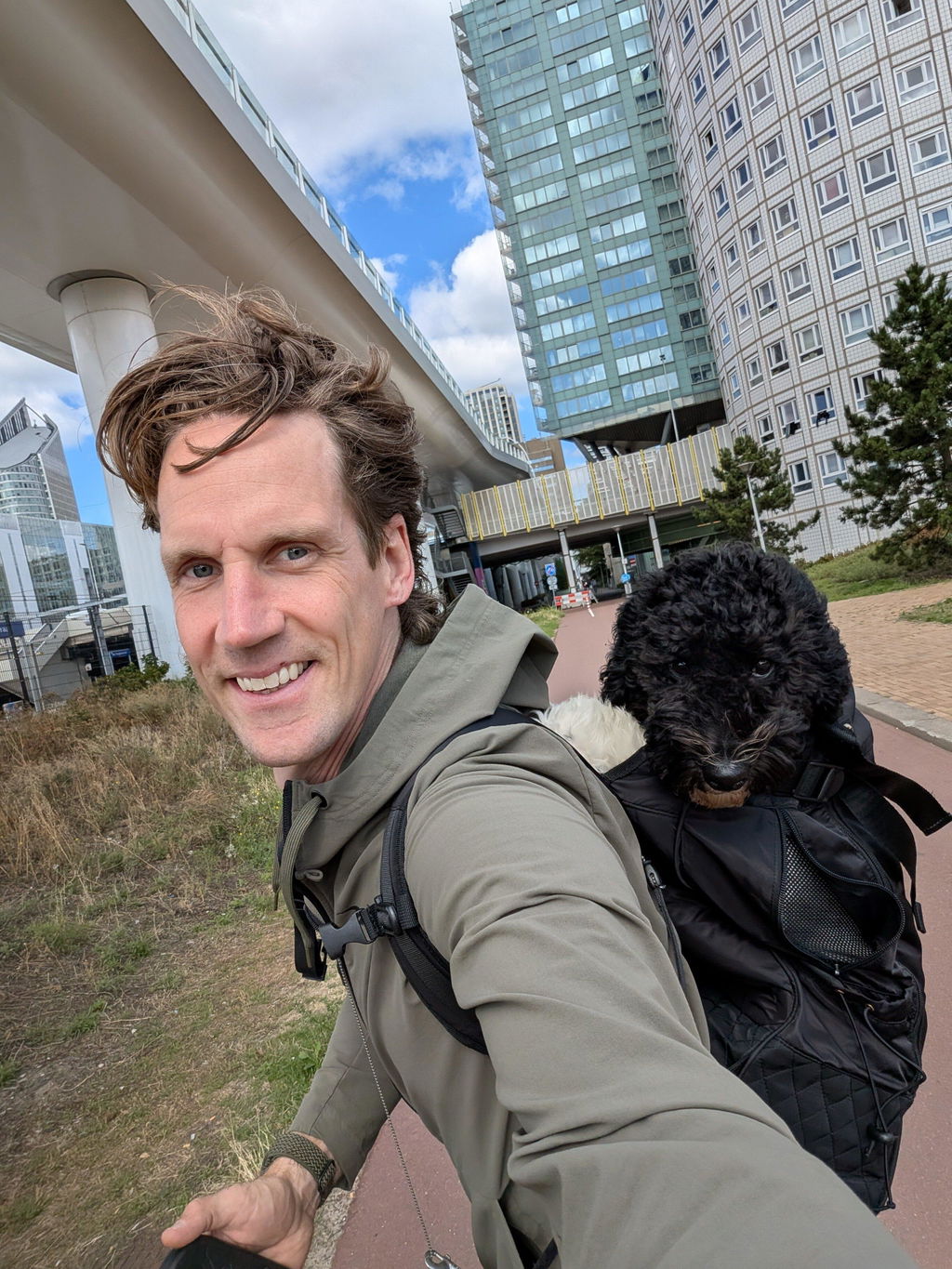

How does my dog get used to a dog backpack?
You bought the perfect dog backpack and cannot wait to head out together. Then it turns out your dog hesitates, will not step in, or gets restless the moment you lift the bag. Frustrating, but completely normal.
The good news: most dogs do not need weeks. With a calm, positive approach many dogs learn within a short time that a dog backpack is a safe, pleasant place. This guide walks you through a clear plan to get your dog used to the backpack quickly and without stress. Puppy or adult dog, the method builds trust and makes the bag something good.
Why training matters
A dog that is not used to a backpack can feel unsure or tense. By guiding it calmly, it learns that the backpack is not a threat but means comfort and closeness. Good training means your dog feels safe, you head out relaxed, and carrying stays comfortable and stress-free. And it is often faster than you think.
What you need
Before you start, have this ready: a dog backpack in the right size (check the size guide), small tasty treats, a familiar blanket or toy, a quiet room without distraction, and a few short practice moments a day.
Step by step: how do I get my dog into a backpack?
Step 1: Meet the backpack
Put the open backpack on the floor in a room where your dog feels comfortable. Let it sniff and explore. Reward curiosity like looking and sniffing, but force nothing. The goal is that the backpack simply becomes part of the room. This often takes one or two short moments.
Step 2: Make the backpack attractive
Put a blanket or toy in the bag and toss a treat into the opening now and then. Place treats just within reach and use a calm, positive voice. Let your dog decide how far it goes. That builds a positive association with the bag.
Step 3: Step in by itself
Place the treat a little further in so your dog really steps in. You can use a fixed cue like "in the bag". Reward the moment it stands or sits inside, and leave the bag open. The goal is confident stepping in. Many dogs do this after a few sessions.
Step 4: Sit calmly for a moment
Let your dog sit in the bag for a few seconds before it may come out. Start with 2 to 3 seconds and build up slowly. Reward calm behaviour, so it links the bag with relaxation.
Step 5: Close the backpack briefly
Close the bag for a moment while your dog is inside. Start with 1 to 2 seconds, open it again straight away and reward. Build up calmly so a closed bag starts to feel safe.
Step 6: Lift the bag
Lift the backpack a few centimetres and set it straight back down. Start very short, talk calmly to your dog and reward after every repeat. The goal is getting used to movement, and it often goes faster than expected.
Step 7: Carry short stretches
Walk a few steps through the house with the bag. Start with 5 to 10 steps, set the bag down, open it and reward. Increase the distance slowly. That is how it learns to be carried comfortably.
Step 8: The backpack on your back
Only now put the backpack on properly. Stand still first, then walk a few steps, and keep sessions short. The goal is building trust during normal walking.
Step 9: A little outside
Start outside in a quiet spot, in front of the door or in the garden. Do short rounds of 5 to 10 minutes in a calm setting and watch your dog closely. That is how it learns to combine new stimuli with safety. Cycling comes after that; see the dog backpack for cycling guide.
Common questions
My dog will not go in the bag
Go back a step. Make the bag more rewarding with better treats and let your dog set the pace.
My dog gets restless when I lift it
Lift lower and shorter. Reward before your dog gets restless, not after.
How long does this take?
Some dogs are comfortable in a day, others need a week of short sessions. Short and positive beats long and forced every time.
Ready for the first trip?
Measure your dog, pick the size and order. If it does not fit, you have 14 days to return it. See the Homies dog carrier.